Why Custom I/O Port Engineering Is Critical for Fully Rugged N14A Devices in Harsh Environments
In mission-critical industries ranging from intelligent manufacturing to public utilities, the reliability of rugged computing hardware is non-negotiable. Standardized I/O configurations, while cost-effective for consumer-grade devices, often become failure points when deployed in extreme conditions. It is under such demanding scenarios that purpose-built I/O port architecture—especially in fully rugged computers like the N14A—proves indispensable. Through integrated hardware-software co-design, advanced sealing techniques, and compliance with MIL-STD-810G and IP67 standards, custom I/O solutions prevent ingress, corrosion, and connectivity loss in the field.

Engineered Durability: How Fully Rugged N14A Computers Outperform Semi-Rugged Alternatives
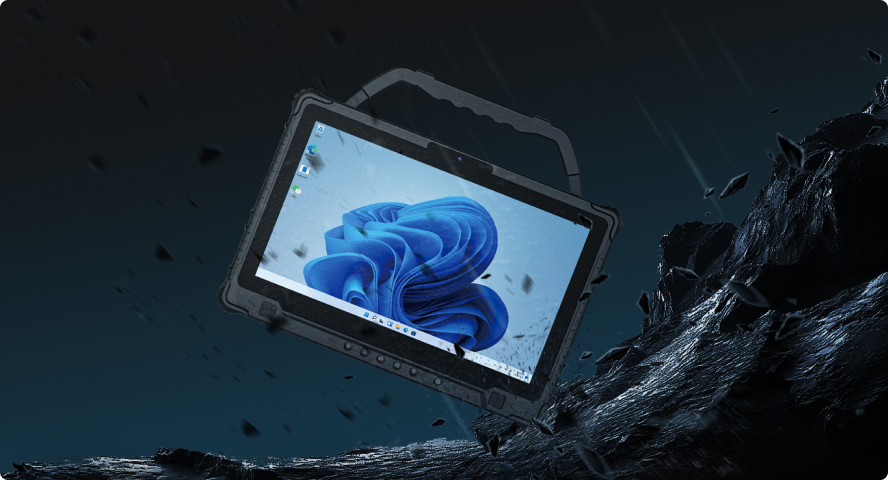
It is widely recognized that not all rugged devices are engineered to the same standard. The N14A model, defined explicitly as a fully rugged computer, undergoes rigorous testing protocols far exceeding those applied to semi-rugged counterparts. Reinforced magnesium alloy chassis, shock-mounted internal components, and conformal coating on circuit boards are passively integrated to resist vibration, thermal cycling, and moisture exposure. Unlike off-the-shelf tablets, where modularity compromises structural integrity, the N14A’s sealed enclosure ensures uninterrupted operation in environments where dust, rain, and mechanical stress are constant threats.
Custom I/O Configurations for Industry-Specific Integration Challenges
Rarely is a one-size-fits-all I/O layout suitable across verticals. In transportation and energy industry applications, for instance, legacy peripherals and proprietary communication buses necessitate tailored port arrays. Only through deep firmware-level coordination can hot-swappable interfaces maintain stable data handshakes during vehicle ignition cycles or sudden power interruptions. When inverted deployment angles or confined mounting spaces are involved, low-profile, pogo-pin connectors or recessed USB 3.2 ports become essential—features rarely found in standardized rugged tablets.
Preserving Environmental Ratings with Sealed, Custom-Built Connectors
It is not uncommon for rugged devices to claim IP65 or IP67 ratings yet fail in practice due to poorly implemented I/O zones. Standard ports, once modified post-production, compromise gasket integrity and allow particulate intrusion. In contrast, devices engineered with factory-integrated custom I/O retain full environmental shielding. M12 and XLR-style locking connectors, frequently specified in surveying and mapping industry equipment, are overmolded directly into the housing, eliminating potential leak paths. Such passive sealing strategies ensure long-term resilience even when exposed to high-pressure washdowns or prolonged humidity.
MIL-STD-810G Compliance Through Purpose-Driven Port Design
When subjected to repetitive drop tests, temperature shocks, and salt fog exposure, standard USB or HDMI ports often degrade before the host device fails. However, in fully rugged systems like the N14A, each I/O interface is validated under MIL-STD-810G parameters as part of the original design. Ports are reinforced with stainless steel sleeves, and cable retention mechanisms are stress-tested to withstand 5,000+ insertion cycles. By embedding compliance at the design phase—not retrofitting it later—manufacturers ensure lifecycle alignment between the connector and the host system.
Extending Device Lifespan with Future-Proof, Modular I/O Architectures
Because enterprise deployments often span a decade or more, forward compatibility must be anticipated. Systems built with modular I/O carriers allow reconfiguration as communication standards evolve—such as transitioning from RS-232 to CAN bus in smart retail kiosks or warehouse management fleets. This adaptability, deeply embedded in the motherboard’s signal routing, prevents obsolescence without sacrificing ruggedness. As a result, total cost of ownership is reduced, and downtime minimized across large-scale operations.
For organizations seeking resilient, long-cycle computing platforms, only purpose-engineered solutions will suffice. Devices like the fully rugged N14A from onerugged.com exemplify the convergence of durability, customization, and lifecycle support required in today’s most challenging operational environments.


Comments
Post a Comment